
Occupational Noise Exposure: OSHA Standards for Workplace Noise
Workplace hearing loss is a common problem but a frustrating one because it is entirely preventable. This is why the Occupational Safety and Health Administration (OSHA) has created standards for workplace noise. With the proper knowledge, training, and protective equipment, employees in loud workplace environments should not have to suffer hearing injuries or permanent hearing loss.
The Dangers of Loud Noise in the Workplace
Loud noise exposure is a leading cause of preventable hearing loss. According to the Bureau of Labor Statistics, roughly 20,000 cases of work-related hearing loss happen annually, with many of those resulting in permanent damage. This type of occupational hearing loss can happen suddenly due to exposure to incredibly loud but short sounds or manifest slowly over time.
Exposure to loud noise can not only lead to hearing loss but also other damage like tinnitus. These work-related issues have been linked to other problems like reduced productivity, psychological stress, and higher workplace accident rates.
A sound’s Frequency, Intensity, and Duration impact the ways it can harm hearing. Frequency is the number of sound waves per second, Intensity is the volume of the sound (measured in decibels), and Duration is how long you’re exposed to it. Generally, high-volume, high-pitched sounds with longer exposures are the riskiest for hearing damage.
Reducing Employee Exposure to Workplace Noise
OSHA recommends employers investigate different ways to reduce employee exposure to excessive noise in the workplace.
Engineering Controls
These involve replacing or modifying equipment to reduce the level of noise that reaches an employee’s ear. Examples include:
- Choosing low-noise machinery or tools
- Lubricating and maintaining equipment and machinery
- Placing a barrier between workers and loud machinery
- Isolating or enclosing the machinery
Administrative Controls
These involve making changes in the schedule or workplace to eliminate or reduce an employee’s exposure to harmful noise. Examples include:
- Operating loud machinery during less crowded shifts, like overnight
- Limiting the time a worker can spend close to a source of noise
- Providing quiet areas where employees can escape noisy machinery
- Creating more distance between workers and loud machinery
OSHA’s Standards for Workplace Noise
Understanding the dangers of noise exposure in the workplace, OSHA has created standards for occupational noise exposure. When average noise in the workplace reaches 85 dB over an 8-hour shift, OSHA requires that employers institute a hearing conservation program. This particular noise level triggers requirements for:
- Training programs
- Hearing protective equipment
- Noise assessment and monitoring
- Audiometric testing
Workplace Hearing Safety Training
OSHA standards require that employers of workers who are exposed to occupational noise receive annual training about hearing protection. Employees must also be informed of the health risks associated with noise exposure.
Required Hearing Protective Equipment
Employees must use personal protective equipment (PPE) to safeguard their hearing from harmful sound waves when noise levels exceed 90 dB despite other controls in place. These devices don’t completely block out sound but rather reduce it to safer levels. Common types of hearing protection include:
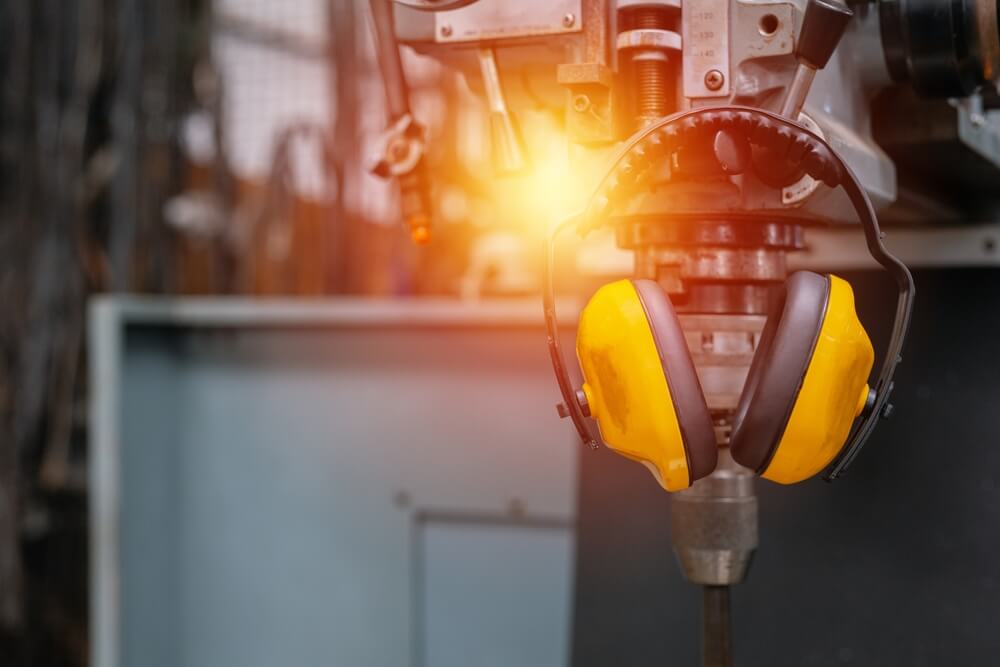
- Earmuffs — These are simple to use yet bulky sound-blocking headphones that can reduce noise by up to 30 dB.
- Earplugs — These items are inserted into the ear canal and can lower noise levels by up to 30 dB. However, they may irritate the ears.
- Canal Caps — These are earplugs attached to a headband intended for intermittent use and are less effective than other options.
Employers must offer equipment that reduces employee exposure to 90 dB at a minimum. Employees should have PPE that is clean, fits properly, and is undamaged.
Noise Assessment and Monitoring
When there is a possibility of occupational noise exposure, employers must conduct a workplace noise assessment and monitor noise levels. Someone who is trained to conduct a sound survey should perform this task using a dosimeter and sound level meter. Employers are also required to keep records of each employee’s noise exposure levels.
Audiometric Testing
If a workplace has significant noise exposure, OSHA recommends free audiometric testing. These are hearing tests for workers, which create a baseline metric for an employee’s hearing. Annual tests can detect any changes that could be caused by occupational noise exposure.
What If You’ve Suffered a Hearing Injury at Work?
If you’ve suffered a hearing injury at work that requires medical attention or restricts you from doing your job, you should understand that your employer is required to provide a safe workplace that protects you from these problems. Appropriate hearing injury protection and training are essential parts of workplace preparedness and effective safety management. To learn more about protecting yourself from workplace hearing injuries, contact an OSHA Injury Attorney directly.


Leave a Reply
Want to join the discussion?Feel free to contribute!