
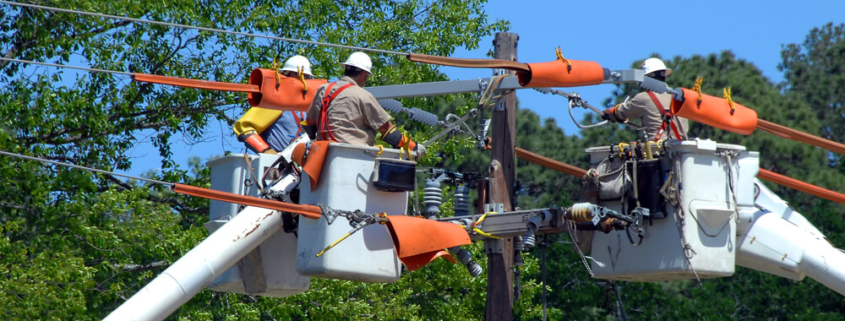
Bucket Truck Safety – OSHA Guidelines on Staying Safe In and Around Bucket Trucks
Vehicles known as “bucket trucks” are among the most useful and versatile on worksites. When operated correctly, they give workers a safe platform to perform elevated tasks. Because a bucket lift is stable, workers can use both arms to perform work, resulting in improved efficiency. That’s why you’ll see these types of trucks used by various workers, from linemen to tree trimmers to painters.
While a bucket truck is relatively simple to operate, these machines present a unique set of challenges and hazards. Fortunately, OSHA provides guidelines for staying safe in and around bucket trucks.
What is a Bucket Truck or Aerial Lift?
Bucket trucks are trucks with an aerial lift attached. Also called cherry pickers, these machines are excellent tools used in a variety of industries to get workers to hard-to-reach areas. They provide a stable and safe work platform when used properly.
Hazards Associated with Bucket Trucks
Accidents are bound to happen on the job. But working with and around bucket trucks is inherently dangerous work. Some of the main hazards associated with bucket trucks include:
- Electrocution — Workers can become electrocuted due to accidental contact with energized wires.
- Overturning — A truck that isn’t parked or positioned properly is at risk of overturning.
- Entanglement — Power lines, tree limbs, and other overhead items can cause entanglement issues with a bucket truck and lead to injuries.
- Falls — Employees not provided with proper training or fall protection have a higher risk of falls from bucket trucks.
- Collisions — Traffic on busy roads or struck-against hazards from falling objects can cause serious injuries while using bucket trucks.
Typical injuries when working from bucket trucks include sprains, strains, broken bones, burns, lacerations, electrocution, and even death from being struck by objects or falls. If businesses don’t take the time to be fully aware of hazards and create a strong workplace safety plan, bucket truck accidents are more likely to occur.
OSHA Safety Guidelines for Working Around Bucket Trucks
Bucket trucks require specialized training to operate to ensure the safety of workers and anyone in the area. OSHA provides an outline for bucket truck safety, which falls under the broader umbrella of aerial lift safety. Only authorized and trained workers should operate or use a bucket truck. Some of the specifics of bucket truck safety include:
Pre-Work Inspections and Safety Check
Before any work begins, there should be a pre-use safety check that includes:
- Review equipment maintenance records
- Check wheels, tires, and engine
- Look for any deteriorating or missing part
- Test all ground controls before starting work
- Confirm that railing and door latches are in working order
Work Area Inspection
The area around the bucket truck must also be inspected, including:
- Check the area for excessive slopes, drop-offs, debris, soft spots, and holes
- Check the area for trees, overhead power lines, and building overhangs
- Make sure the bucket and all equipment is secured before positioning the truck
Fall Protection
While falls from bucket trucks are relatively rare, they can happen. A more common scenario is where a worker gets knocked out of the bucket when another object or vehicle collides with the equipment.
According to OSHA’s rule of thumb, all workers should be wearing personal fall protection if they are going to be six feet or more off the ground. The question for employers will be what type of fall protection will be used, such as a full-body harness or body belt.
Personal Protective Equipment
All workers should be provided with the appropriate personal protected equipment, including:
- Hard hats for workers
- Appropriate gloves for the job
- Face shields or safety glasses for workers
- Appropriate fall arrest systems for bucket workers
Bucket Truck and Aerial Lift Operation
When operating a bucket truck, the proper procedures include:
- Set brakes and use wheel chocks, even if working on a level surface
- Establish an appropriate and safe work zone if working in a high-traffic area
- Secure bucket and use safety chain before operation
- Avoid leaning over the bucket railing or climbing on tool brackets
- Don’t exceed the manufacturer’s load capacity
- Never move the truck with a worker in the bucket
Emergency Escape
If something goes wrong, bucket truck workers are trained on safe escape methods:
- Have auxiliary power available
- Have a controlled descent rope or escape ladder
Learn More About Protecting Yourself from Bucket Truck Injuries
Whether you work as a power lineman, in a construction trade, or in some other industry, your employer has an obligation to provide a safe workplace that protects you from being injured while working around bucket trucks. Having appropriate training on the use of aerial devices and access to fall protection is a critical part of effective safety management and workplace preparedness. To learn more about protecting yourself from bucket truck injuries, contact OSHA Injury Attorney directly.


Leave a Reply
Want to join the discussion?Feel free to contribute!